Korean fermented foods are having a moment. As consumer demand for products that deliver both authentic flavor and health benefits grows, interest in postbiotic functional ingredients has exploded. According to the USDA Foreign Agricultural Service’s 2025 Trends in South Korea Food Sector report (published January 2026), the Korean food industry is leaning hard into health-conscious innovation — high-protein, low-sugar, slow-aging-positioned products — alongside the cultural collaborations driving Korean food’s global appeal.
Two consumer trends are converging in 2026 — the mainstreaming of Korean cuisine and the surging demand for functional foods. Korea’s centuries-old fermented pantry sits at exactly that intersection. Product developers building postbiotic functional ingredients into their pipelines have a rare opportunity to deliver authentic flavor and proven health benefit in a single ingredient.

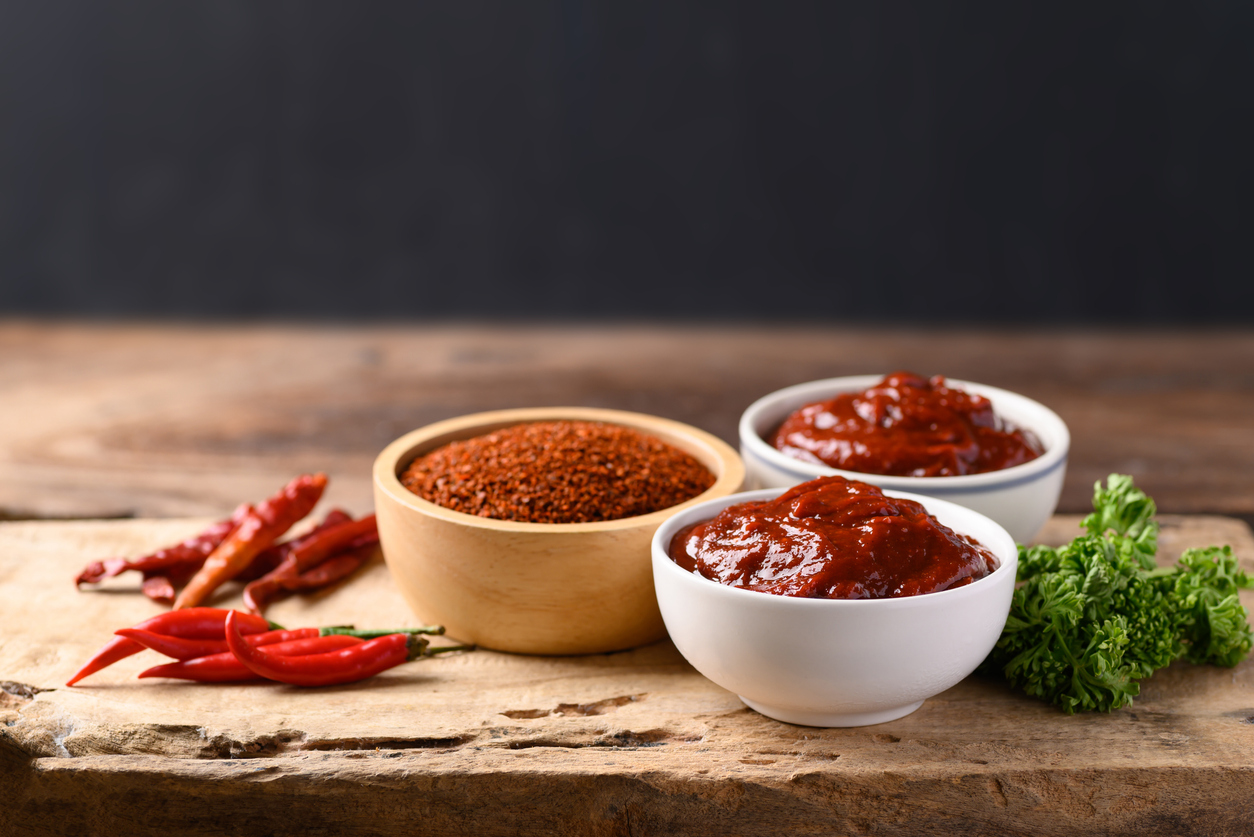
That dual identity is helping Korea’s postbiotic rich foods transform US food and beverage innovation. Gochujang (a savory, sweet, and spicy fermented paste made from red chili powder, glutinous rice, fermented soybeans, and salt) and makgeolli (a lightly sparkling “farmer’s wine” made from cooked rice) aren’t just culinary staples. They are foods built around live microbial fermentation, and they sit naturally at the center of the conversation about postbiotic functional ingredients. Consumer interest is showing up in the numbers: per Circana’s April 2026 Share of Sip beverage market analysis, beverages tied to digestive-health benefits posted 40% dollar growth in 2025 — the fastest-growing functional-benefit segment in the entire beverage category.
What makes Korean fermented foods “functional”?
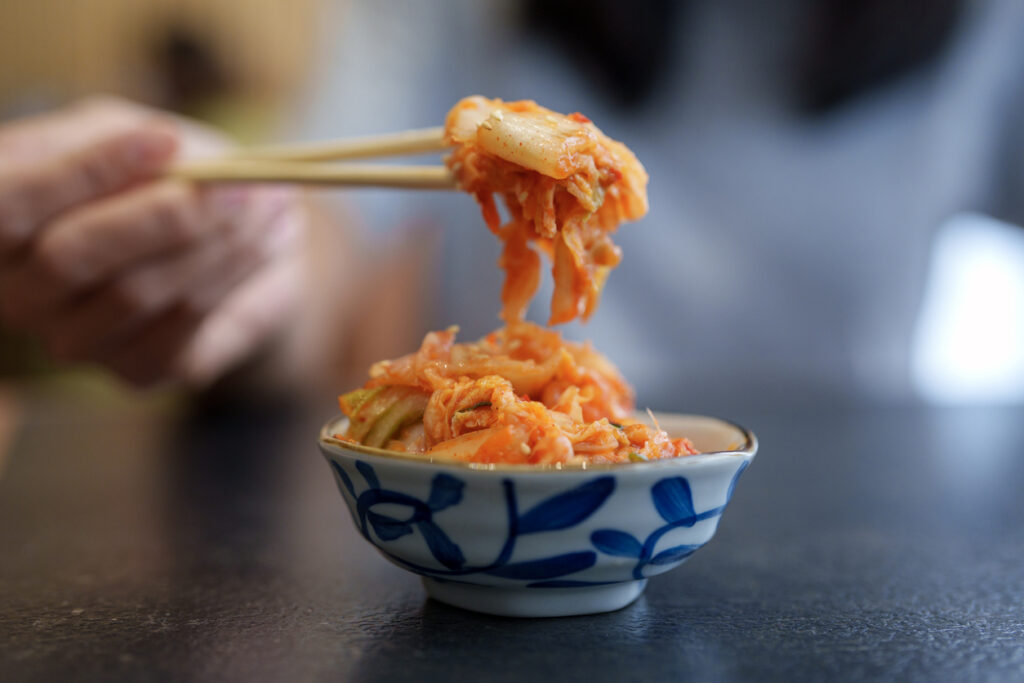
Korean fermentation is deliberate. Doenjang and gochujang both rely on meju, a fermented soybean brick that develops a complex consortium of Bacillus, Aspergillus, and Lactobacillus species over months of aging. Kimchi fermentation is dominated by lactic acid bacteria — primarily Leuconostoc mesenteroides and Lactobacillus plantarum — which produce the lactic acid, mannitol, and carbon dioxide that give the dish its signature pop. Peer-reviewed research published in Foods (NIH/PubMed Central) documents the metabolites produced by kimchi LAB — organic acids, exopolysaccharides, mannitol, bacteriocins, bioactive peptides — and the antioxidative, anti-inflammatory, and cholesterol-lowering effects associated with them.

These microbial communities don’t just create flavor. They produce metabolites such as short-chain fatty acids, bioactive peptides, and exopolysaccharides. These fermentation byproducts are increasingly studied for their purported beneficial effects on the gut microbiome. The International Scientific Association for Probiotics and Prebiotics (ISAPP) consensus paper published in Nature Reviews Gastroenterology & Hepatology defines a postbiotic as “a preparation of inanimate microorganisms and/or their components that confers a health benefit on the host.” That definition is significant for product developers. Many traditional Korean fermented foods undergo cooking or shelf storage that inactivates live cells. However, their bioactive components are preserved, placing them squarely within the postbiotic conversation. A 2025 systematic review published in Frontiers in Nutrition (NIH/PubMed Central) catalogued 31 distinct bioactive compounds in fermented foods — including bioactive peptides, polyphenols, GABA, and short-chain fatty acids — with documented effects on cardiovascular health, glucose regulation, immune modulation, brain health, and more.

Want more Food and Beverage Trends?
Join our email list to stay on top of demand generating food, beverage, and flavor innovation. We make it easy!
Why are postbiotic functional ingredients moving into mainstream food and beverage?
Three structural forces are accelerating adoption in 2026:
Alcohol consumption is in measurable decline. According to Gallup’s 2025 Consumption Habits poll (August 2025), just 54% of U.S. adults now report drinking alcohol — a 90-year low — down from 62% in 2023. That opens shelf space for non-alcoholic functional alternatives, including makgeolli-inspired fermented beverages.
Functional benefits now drive beverage purchase decisions. Per Circana’s 2026 Beverage Forum analysis, consumers “increasingly disregard traditional beverage categories and instead select beverages based on desired outcome” — with digestive health (+40% dollar growth in 2025), mood support (+80% in 2025), and immune health (+43% in 2025) leading the shift. That outcome-led behavior maps directly onto what fermented Korean ingredients can deliver.
Health-conscious eating is going mainstream, not niche. Per the USDA FAS Korea trends report, “slow aging” and healthy living are now driving the Korean food industry’s product mix — high-protein, low-sugar formulations are being designed for multi-generational appeal, not just for fitness consumers.

How do Korean fermented flavors actually taste?
Korean fermented profiles work because they layer multiple tastes that other functional ingredients can’t deliver:
Natural effervescense. Makgeolli and unpasteurized kimchi brine carry a yeasty, slightly carbonated character that’s now showing up in mocktails and non-alcoholic beverages across the U.S. and Asia. that rounds out what would otherwise be sharply savory profiles.
Tang. Lactic and acetic acid produced during fermentation deliver a clean, bright sourness — ideal for masking the metallic or earthy off-notes that often accompany added vitamins, minerals, and adaptogens.
Umami depth. Doenjang and gochujang are loaded with free glutamates, nucleotides, and Maillard products from extended aging, giving them the savory weight that thin functional beverages typically lack.
Sweet-spice complexity. Gochugaru-based fermentation contributes a slow-building, fruity heat that pairs naturally with ginger — another foundational Korean flavor that BPF profiles in detail.
Where do postbiotic functional ingredients fit in product development?
Three application areas are particularly active right now:
Savory snacks and sauces. Gochujang, doenjang, and kimchi powders are being formulated into chips, crackers, and dressings where their fermentation depth plays double duty as flavor and functional positioning.
Functional beverages. Korean barley tea (boricha) and traditional green tea-based postbiotic blends are showing up in canned RTDs that lean on the gut-health story without the supplement-aisle aesthetic. Circana flagged colostrum, ketones, and paraxanthine as “the next wave of functional ingredients already on shelves” — a clear runway for fermentation-derived postbiotics alongside them.
Fermented sodas and shrubs. Makgeolli-inspired alcohol-free sparkling drinks combine the body of fermented rice with bright fruit acid — a flavor architecture similar to the trend we’ve documented in fermented beetroot beverages. This sits squarely in the “Modern Soda 2.0” space that Circana identified as a $1.7B category in 2025 with 46% dollar growth.

The opportunity for brands in 2026
What separates the brands that win in this space from the ones that stall? Two things. First, formulation expertise. Fermented ingredients carry naturally variable flavor loads. Balancing the natural flavors and actives in the postbiotic functional ingredient is non-trivial. This is important to know when sourcing fermented ingredients.
Sound complicated? You’re not alone. Whether you’re developing a postbiotic-fortified RTD, a kimchi-style snack with clean-label fermentation, or a Korean-inspired functional shot, Blue Pacific Flavor’s ingredient solutions team can help. Why not pair authentic fermented flavor systems with our functional ingredient portfolio? We’re your one-stop shop when it comes to combining natural flavor with postbiotic functional ingredients.

Want to keep going?
Read part one of our Korean Flavor series: From Gochujang to Galbi (linked from the BPF blog index)
Companion piece: The Flavor Economy — What’s Driving F&B Innovation in 2026
Explore our functional ingredient lineup: Gut Health Ingredients | Mocktail Trends 2025

Interested in exploring a Korean-inspired flavor for your next project? Request a sample!
Sources
- Circana — Share of Sip: New Horizons in Beverages, 2026 U.S. Beverage Forum (April 28, 2026)
- USDA Foreign Agricultural Service — South Korea: 2025 Trends in South Korea Food Sector (January 2026)
- Salminen, S. et al. — ISAPP consensus statement on the definition and scope of postbiotics. Nature Reviews Gastroenterology & Hepatology
- ISAPP — Consensus definitions: probiotics, prebiotics, synbiotics, postbiotics and fermented foods
- Park, K. et al. — Some Important Metabolites Produced by Lactic Acid Bacteria Originated from Kimchi (Foods; NIH/PubMed Central)
- Bioactive compounds in fermented foods: a systematic narrative review (Frontiers in Nutrition, 2025; NIH/PubMed Central)
- Gallup — U.S. Drinking Rate at New Low as Alcohol Concerns Surge (August 2025)
